

Blog
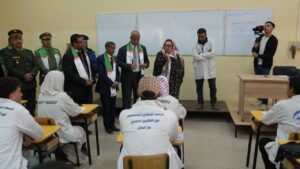
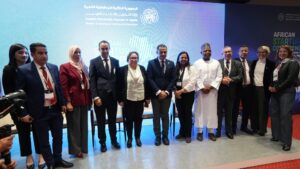
On Thursday, May 22, 2025, the Minister of Vocational Training and Education and the Minister of National Solidarity, Family and Women’s Affairs presided over the signing ceremony of a framework cooperation agreement between the two ministries. The event took place at the Vocational Training and Apprenticeship Center for Physically Disabled Persons in Kouba, Algiers.
This initiative forms part of the broader effort to enhance mechanisms for supporting vulnerable groups and promoting their social and professional integration—particularly people with special needs—by facilitating their access to vocational training and guiding them toward sustainable professional and craft careers.
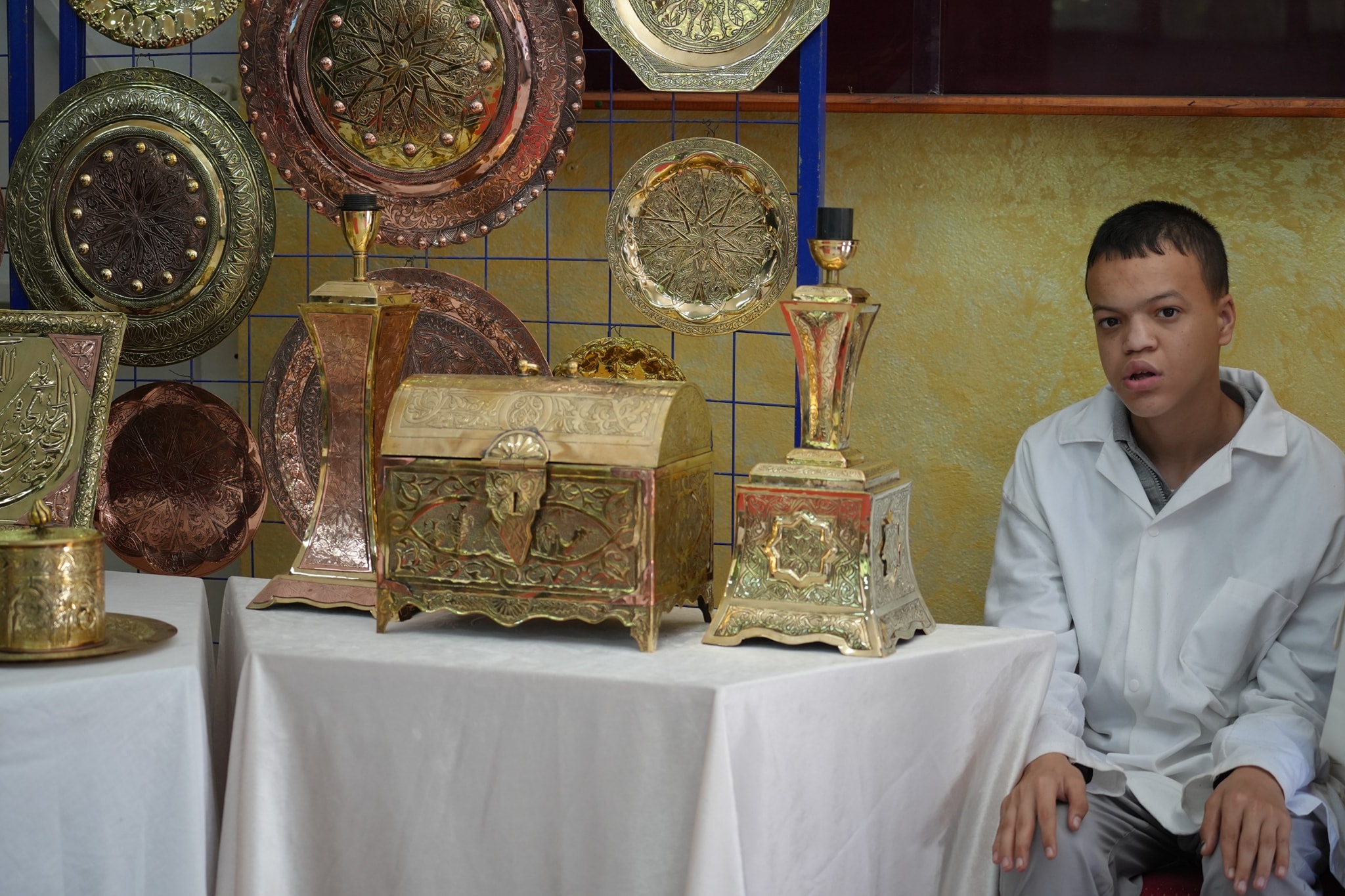
The ministers began their visit with a tour of an exhibition showcasing the achievements of trainees with disabilities, viewing projects across various fields. These works reflected the participants’ remarkable capacities for innovation and integration, provided the right training and support conditions are in place. Both ministers praised the quality of training and commended the efforts of instructors and educators involved.
In his remarks, the Minister of Vocational Training and Education expressed pride in the talent emerging from training centers, reaffirming the ministry’s commitment to establishing dedicated classes for people with disabilities and expanding training opportunities to include other groups, such as children with autism. He also announced that a final agreement had been reached with the Ministry of Solidarity concerning disability allowances, which will lead to increased support and improved training and integration conditions.
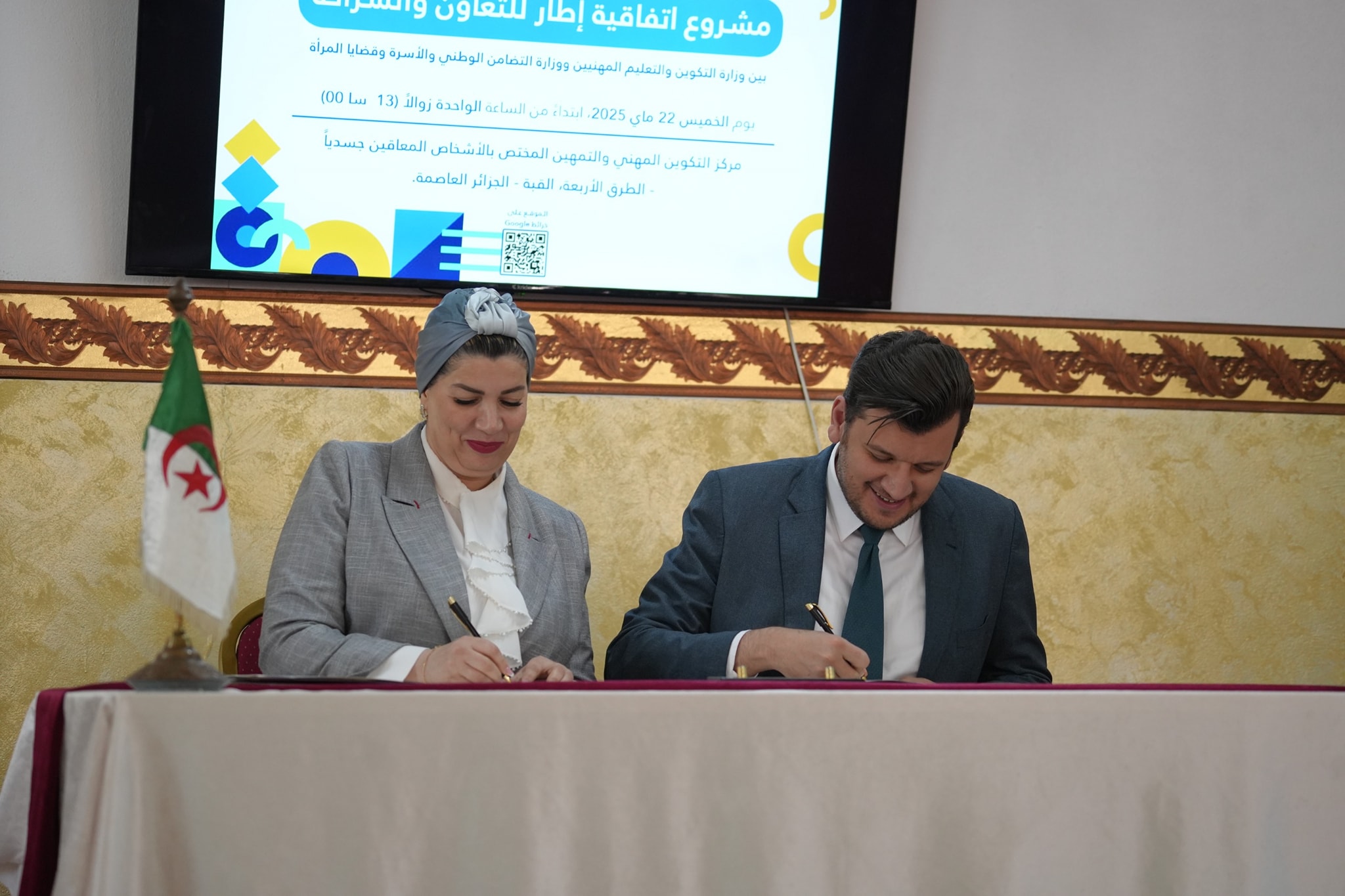
For her part, the Minister of National Solidarity, Family and Women’s Affairs stated that the agreement aligns with a comprehensive approach aimed at enhancing care quality and opening up real integration prospects for this demographic. She noted that approximately 8,000 vocational training placements will be made available for craftspeople with disabilities, emphasizing that providing support and guidance remains a top priority for her ministry.
The agreement focuses on several practical areas, including:
- Expanding vocational training offerings for women and girls in vulnerable situations, people with special needs, and elderly individuals capable of integration.
- Adapting training programs and specializations to the specific needs of target groups.
- Recognizing skills and supporting micro-enterprises and artisans.
- Enhancing coordination and monitoring mechanisms at both central and local levels.
This agreement reflects a genuine commitment to translating government priorities in the areas of solidarity and vocational training into concrete actions. It is a step toward promoting professional inclusion and encouraging the active participation of people with special needs in Algeria’s economic and social development.
